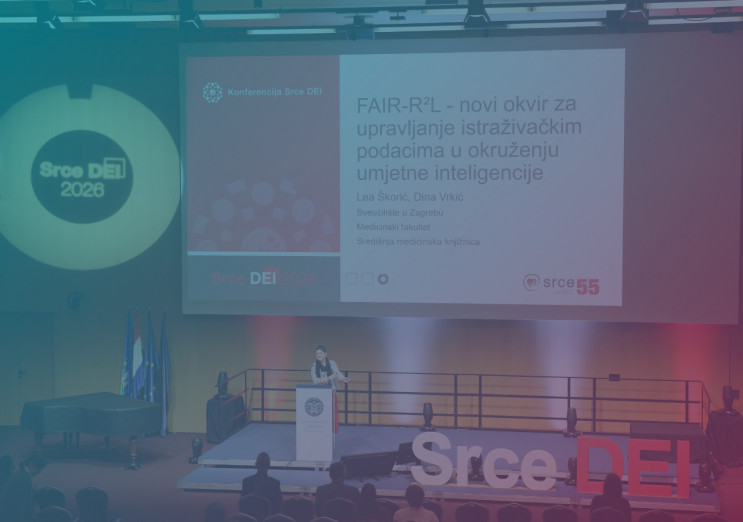
FAIR-R²L Rubric presented to Croatia's academic and tech community
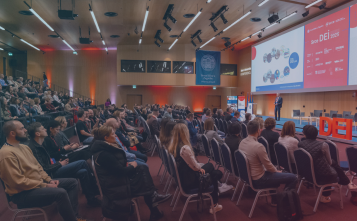
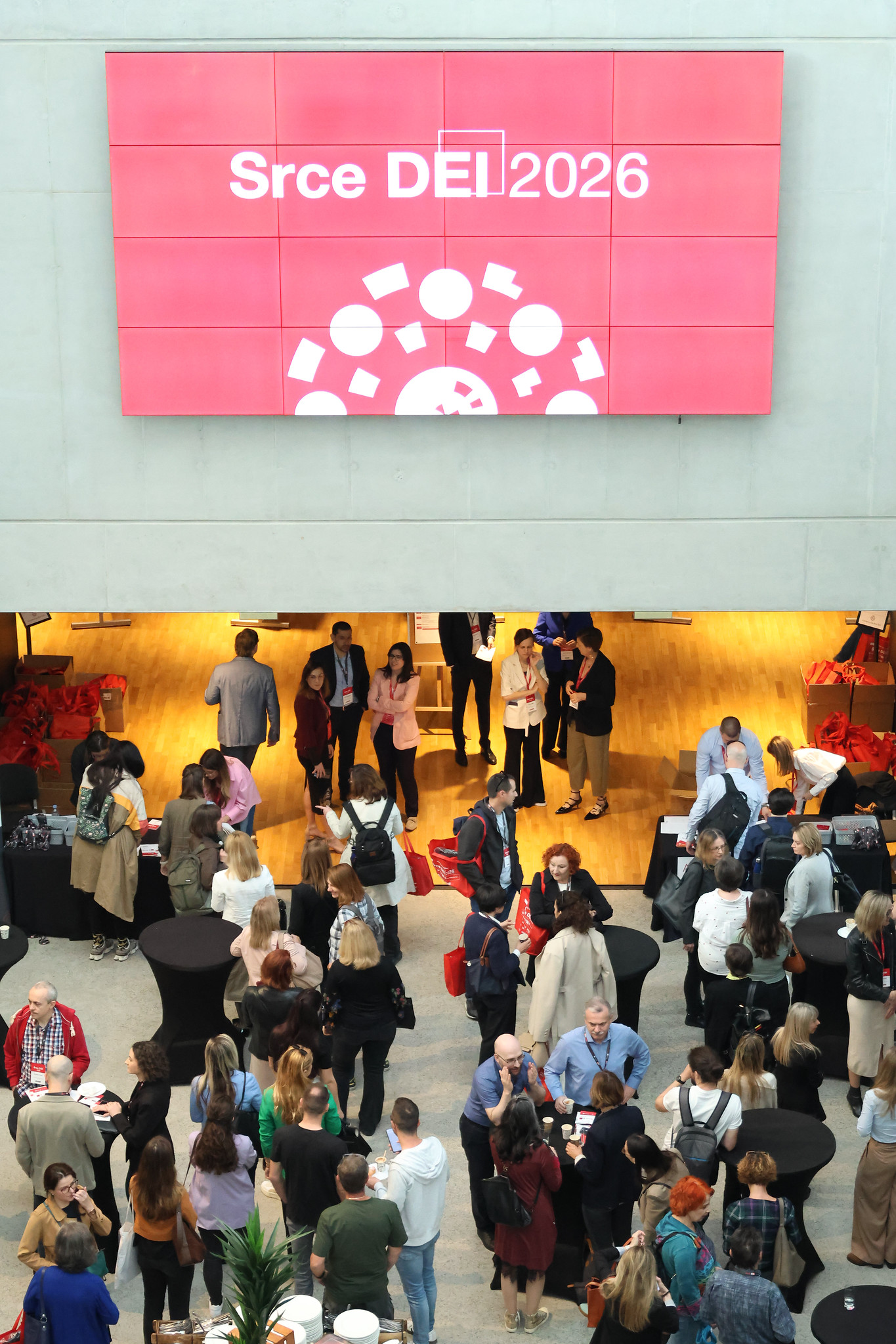
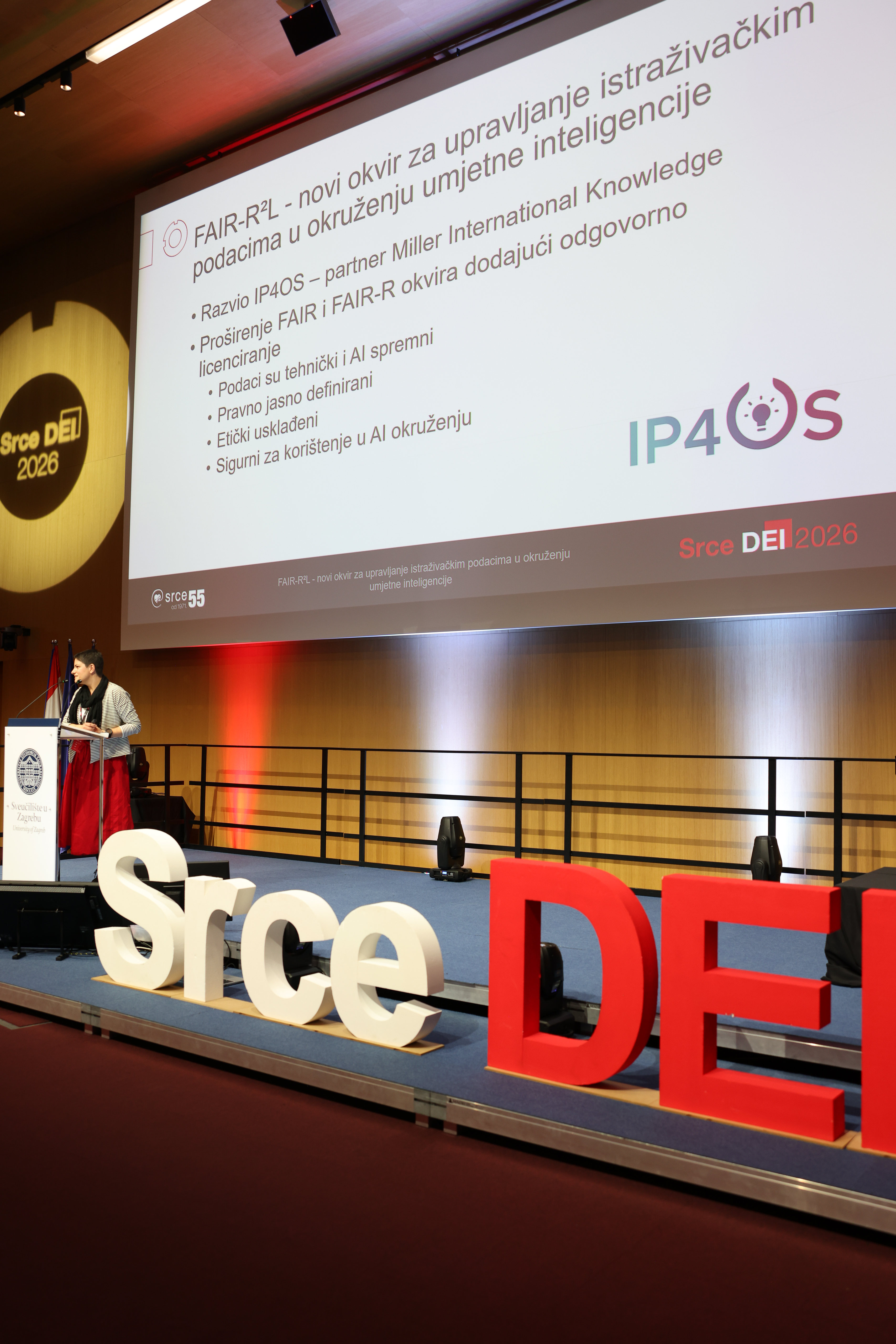
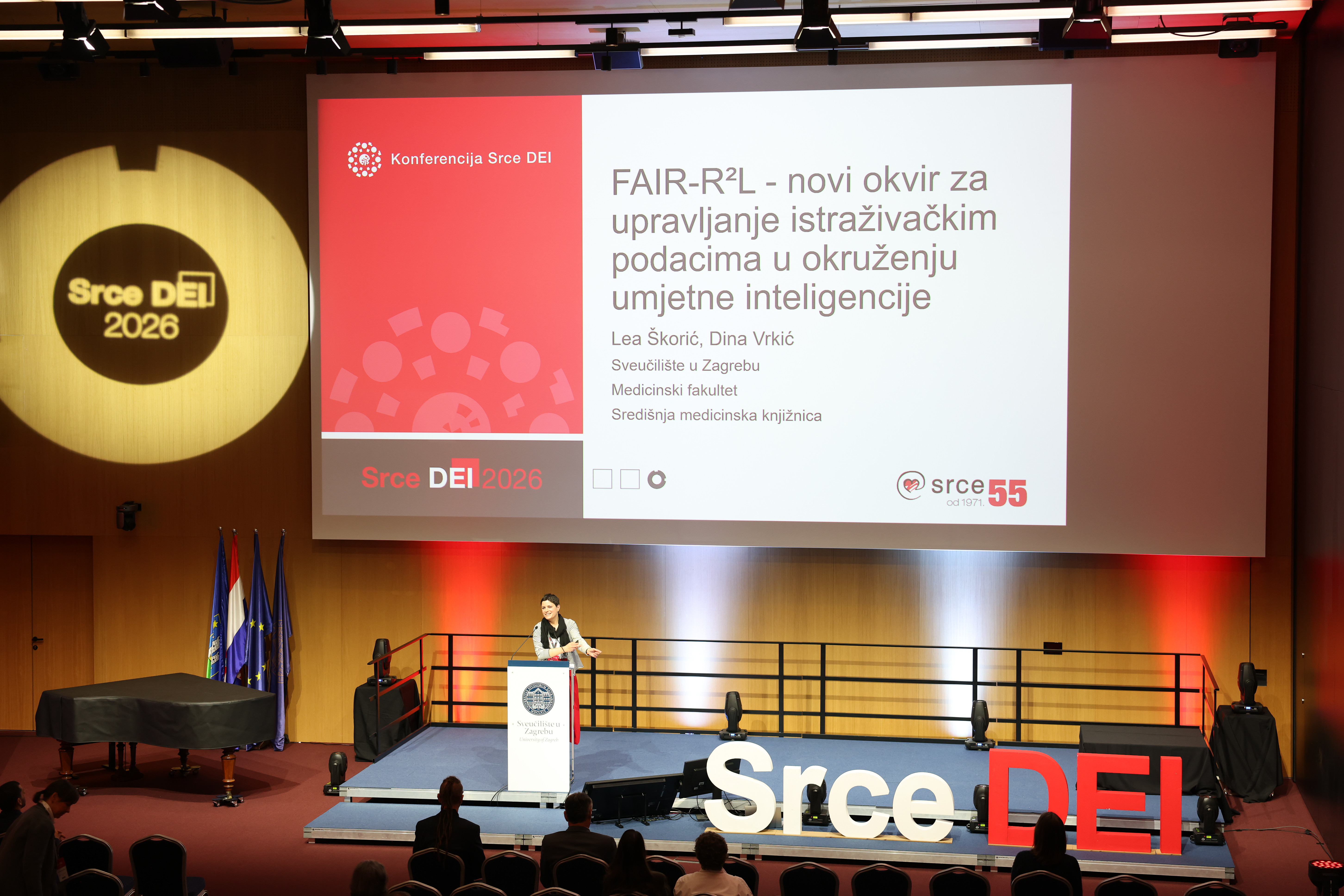
The University of Zagreb University Computing Centre - (SRCE) and the University of Zagreb organized the annual DEI conference, which brought together Croatia's academic and IT community on April 28th and 29th in the SEECEL building in Zagreb. The event, which drew over 500 attendees, functioned as a gathering place for university administrators, IT specialists, researchers, librarians, educators, and numerous other individuals involved in the ecosystem of science and higher education. Our partners from the University of Zagreb School of Medicine (UZSM) represented the IP4OS project at the event.
 |
 |
 |
On the first day of the conference, the program included several thematic blocks dedicated to the development of the information landscape of science and higher education, advanced computing and artificial intelligence, and agile management of higher education institutions in the context of digital transformation, through presentations and workshops. In the second part of the program, concrete examples of the application of AI and advanced computing in meteorology, drug development, text processing, genomic research, and business systems are presented.
The day concluded with the invited lecture by Prof. Iva Tolić, PhD, who developed a long-term imaging method for monitoring the division of individual cells: "From Microscope to Supercomputer: The Role of Infrastructure in Cancer Research".
The conference day ended with a special celebratory note in honour of the SRCEs 55th anniversary. During those years, they successfully responded to the growing needs and demands of the community, enabling knowledge, connecting people, and systematically building a national common e-infrastructure that supports the development of the academic and scientific community and society in general.
The second day of the conference started with the invited lecture: "The business of educational and research technology: who owns it and why it matters", held by Janja Komljenovič, PhD, University of Edinburgh. In the lecture, she analyzed the immediate challenges that higher education institutions will face in the near future.
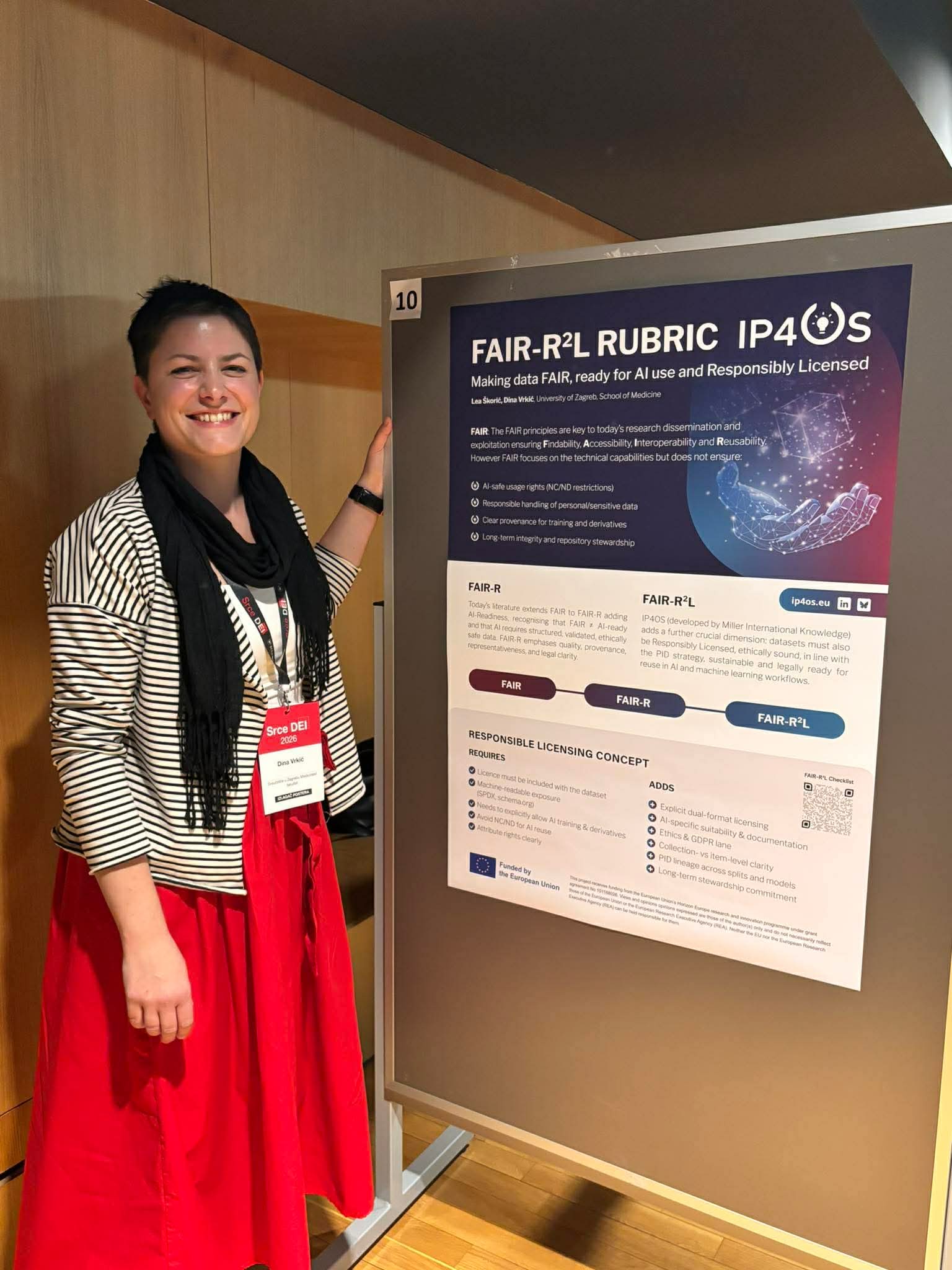
After, there was a series of presentations on diverse project activities and best practices, including an IP4OS project presentation delivered by our project partners, UZSM. Dina Vrkić presented the poster "FAIR-R²L Rubric Making, Data FAIR, ready for AI use and Responsibly Licensed". The growing use of artificial intelligence (AI) and machine learning (ML) in science highlights the need for datasets that are not only technically open but also legally and ethically ready for reuse. The existing FAIR principles are the foundation for research data governance, but they are primarily focused on technical aspects and do not fully address the challenges of licensing and legal certainty in the AI context. It was an exceptional opportunity to invite participants to interact at the poster booth, especially as the new FAIR principles and other outcomes from this project are in high demand in the academic and research environment.
The SRCE DEI 2026 conference also hosted the fourth edition of the EOSC (European Open Science Cloud) National Tripartite Event: Croatia (NTE Croatia 2026) entitled "All Faces of Open Science". At the meeting, representatives of the European Commission, the EOSC Association, the Ministry of Science, Education, and Youth, and SRCE discussed topics relevant to the development of Open Science in the EU and in Croatia, including the establishment of a national EOSC node in Croatia. The block covered various aspects of science, from research data management plans to diamond journals.
The IP4OS team found that attending the conference was helpful, especially since, with this project, we definitely pinpointed not only the most popular topics in the science and research community but also the desperately needed topics – synergy between IP and OS.